

Civil society leaders rally behind BC Declaration act
February 18, 2026
Canadian civil society groups support closing arms export loopholes
February 23, 2026Back in March 1987, when I started at Scotia (then McLeod, Young, Weir) fresh out of University, there were two main tracts to creating a socially responsible investment (SRI) portfolio.
The first was “best of sector”—we used whatever research was available at the time to determine a company’s environmental, social, and governance (ESG) strengths and weaknesses, rate them, and compare them with their peers. We then would buy only the better—relatively—rated ones or avoided buying the poorer—relatively—rated ones. Thus “best of sector.”
The second layer that we applied was “exclusionary”—we excluded whole industries or individual companies from consideration because of what that industry or company produced. In the 80s and 90s, these companies were referred to as “sin stocks”—tobacco companies, weapons manufacturers, gambling stocks, and producers of pornography. The genesis of these particular exclusions is that SRI was “invented” by Quakers in the early 20th century and gained widespread credibility during the Vietnam War. Around 2000, when the danger of climate change became obvious, the idea of “fossil-fuel free” portfolios gained popularity and a new category of exclusionary portfolios was born.
And that’s the way it’s been with little change for the past 30 years. When I started in the late 80s some SRI investors were divesting of CIBC and Shell because of their ties to the Apartheid regime in South Africa and some were starting to divest of tobacco companies (I say some because I saw Rothmans—a tobacco company in the Canadian Cancer Society portfolio, and gold mining companies in The World Wildlife Fund investment portfolio).
The logic is that there are certain industries and/or companies that are causing harm to society such that SRI investors do not want to invest in them regardless of their relative-to-peer ESG score. There is of course also a financial corollary—these companies’ stocks will perform poorly over the long-term because of what they do for a living, so even non-SRI investors should avoid them.
The obvious and easiest poster child is tobacco stocks. Not only does the product kill people and have a huge negative effect on our healthcare systems and so on, but the tobacco companies knew this about their product and formulated it to be addictive and then for many years lied about it until finally the research and a couple of “whistle blowers” caught up with them. The ultimate “sin stocks.”
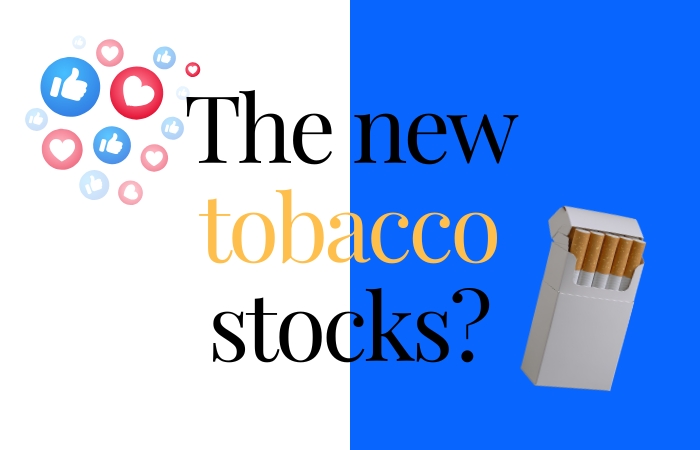
Enter big tech, and for the purposes of this essay, Meta
In the past few years research has shown that social media produces “product harm” in particular harm to children and young adults. One of the leading voices in this field of research has been the social scientist Jonathan Haidt. His book Anxious generation was published in 2024. He showed compelling evidence of a strong correlation between social media and mental and emotional illness among children and young adults. He seemed to show up on every media outlet, did TED talks, and even went to Davos and testified before Congress. As his work seemed to accurately reflect what we are all experiencing anecdotally, and because other research seemed to be validating his, the Government of Australia enacted the Online safety amendment last year, prohibiting people under the age of 16 from holding social media accounts.
In a soon-to-be-released paper (March, 2026) Jonathan Haidt along with Zachary Rausch provide new damning evidence of the harm caused by social media. Key take-aways:
- The average U.S. teen spends five hours/day on social media.
- 25% of 13-year-olds spend seven+ hours/day on social media.
- 45% of U.S. teens say it negatively affects their sleep.
These usage numbers make it clear: this isn’t a chosen form of entertainment as much as it is an addiction. The report synthesizes seven levels of harm including cyberbullying, sextortion, exposure to harmful content (suicide, eating disorders, self-harm), and links to anxiety and depression.
When these companies speak of “engagement” it is a euphemism for exploiting psychological vulnerabilities to maximize time-on-platform. Their goal is to create addiction. Sound familiar?
It gets worse: most of the data that Haidt used came from Meta itself! Haidt references 31 studies conducted between 2018 and 2024—obtained through whistleblower disclosures and legal discovery processes. Meta’s own researchers have known that their platforms increase the risk of emotional and mental illness amongst adolescents. Meta tracked it and studied it, but continued selling their product, claiming that it was not causing harm and fighting back vigorously (and successfully) whenever governments tried to restrict adolescents’ ability to use Meta’s products. As I write this Meta is being sued in a California court for creating an addictive product, and thus far Meta executives have testified that they are not.
The ESG rating paradox
If Meta is producing a harmful product and they’ve known about the harm, why then does Meta get a favourable rating from environmental, social, and governance research sources? They get an “average” from Sustainalytics and from MSCI they get a “B”—not great but they get it for privacy and data handling reasons, not anything to do with product harm.
Interesting side-note: we bought Meta years ago at around $40 shortly after the IPO but sold it in 2019 at around $200 for SRI reasons—data handing and privacy around the Facebook/Analytica scandal (data and privacy not product harm).
The SRI research firms are asking the wrong questions. In the case of technology companies it’s hard to know what the right questions even are. It’s obvious that data privacy and algorithmic transparency are important, and we should ask about them. But how about the questions, “Does your product cause harm to children?” and “is it designed to be addictive?”?
Meta gets relatively good ratings because, as a large company and as one in the public eye, knowing that they produce a controversial product, they, like the large oil/gas companies in Canada, need to maintain a “good” public image, and they have the resources to do so.
They have staff to answer the ESG questionnaires quickly and effectively. They have programs that “tick” a lot of ESG boxes: Board diversity, inclusion initiatives, and renewable energy programs—all good behaviours that they advertise. ESG rating agencies reward these, while ignoring or underweighting the outcome of a company or industry’s products. It’s why Phillip Morris and Altria (tobacco companies) score higher than Tesla, and why Suncor is a perennial SRI standout on most surveys.
Socially responsible investors need to consider the “good” that such companies are doing, but I believe we need to consider the motives for the good as well. Why is Meta supporting youth programs? Why is Kentucky Fried Chicken giving money to breast cancer research? We need to ask the right questions.
I think we need to do what Quakers did 100 years ago and what socially responsible investment experts Peter Kinder and Amy Domini did 50 years ago—we need to focus on the social outcome of a company’s products. In the case of Meta, thanks partly to Jonathan Haidt, not the ESG research firms, for me, it’s a pretty easy call.
Next up: Alphabet and Apple and what the “right” SRI questions for technology companies might be.
This guest post was written by Alan Harman, a Director and Portfolio Manager at ScotiaMcLeod.