

Unshackled: wisdom from a formerly incarcerated woman
October 22, 2025
CFSC (Quakers) joins 40+ organizations and more than 120 field experts calling for extended national AI consultation
November 6, 2025 In the first months of this new government, Canadians are witnessing a historic surge in military and defence spending—one of the largest increases in decades. For many, this news brings a mix of concern and disbelief, as billions of dollars are redirected toward defence at a time when so many urgent needs remain unmet. In meeting the NATO target of 2% of GDP, it effectively means $9 billion will be spent this fiscal year alone. With an increase to 5% of GDP by 2035, Mark Carney[1] at the NATO summit in The Hague indicated that it would cost Canadians $150 billion in annual defence spending moving forward.
This monumental shift is staggering. While $26.5 billion was poured into defence last year, only $14 billion was dedicated to sustainable development assistance—support that directly improves lives, lifts communities, and strengthens international resilience.
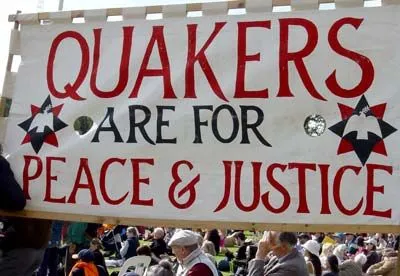
Quakers have opposed all forms of war and violent ‘solutions’ to security for more than 350 years. This historic witness leads us to ask ourselves: what does true security mean? Is it measured by the size of our arsenal, or by the strength of our communities, the resilience of our economy, and the well-being of all? CFSC believes that security in Canada should be about upholding human rights and protecting people from the daily threats to our national stability caused by natural disasters/climate change, job losses, economic inequality, and human rights abuses.
This trend is not unique to Canada, globally, defence spending has soared to an astonishing $2.7 trillion, according to the Stockholm International Peace Research Institute[2], yet the world is not safer. Instead, significant loss of life and horrendous devastation persist—brutal wars rage on in many places, including Congo, Sudan, Ukraine, Yemen, and a genocide in Gaza, with violence also escalating in the West Bank. These tragedies remind us that more weapons do not bring peace; they cause further harm and prolong suffering. On a global scale we must bear witness to this devasting lack of respect for humanity and the increasing disparity between those who have and those who don’t.
To add to violent global insecurity, economic insecurity also rages. A trade war is underway between the U.S. and Canada, and tariffs have been imposed on almost every country in the world by the U.S. The tariffs leveled against Canada[3], have made an already delicate relationship more tenuous. And yet, we are not seeing major spending increases that could improve Canada’s capacity for diplomacy or peacebuilding. Investments that could pave the way for better outcomes during this chaotic and destructive time.
At Canadian Friends Service Committee (Quakers), it is clear to us that, as in all wars, the current economic situation will create mostly losers. Quakers have a long history of military dissent which we continue to affirm as an organization. While defence budgets swell, the silence around increased support for peace, diplomacy, development, and social welfare is deeply concerning. Canadians who rely on these vital programs are left feeling abandoned, as government cuts threaten the very services that nurture our communities and protect the vulnerable. In fact, the government has been seeking broad cuts to all departments of the government of about 15% and in the case of Women and Gender Equality (WAGE), the cuts are as high as 80%.
What is needed are coherent policies that consider the balance between our engagement on the world stage through development and diplomacy and the need for defending against increasingly pervasive environmental threats that existing military personnel are already providing support for. In fact, the Parliamentary Budget Office (PBO) released a report[4] detailing the rapid federal cost increases to provincial and territorial management of natural disasters The PBO “projects that costs will increase further from $881 million per year, on average, between 2010 to 2024 to $1.8 billion per year, on average, from 2025 to 2034”.
While we acknowledge that there is broad public support for increased military funding to improve pay, benefits, and equipment for Canadian Armed Forces members, can the mandate of “military” be transformed? Substantial new funding presents an opportunity to change existing spending priorities. For example, expanding training for disaster management. CAF disaster-response deployments have nearly doubled every five years since 2010. This does not include the 118 requests for assistance received by the CAF in response to the pandemic[5].
Increasing disaster management training and investing in Indigenous wildfire solutions would show that Canada is acting on wildfire management, addressing concerns about smoke impacts [6], while reassuring Canadians their health and safety are a priority. Security today must embrace the reality of climate-driven emergencies—hurricanes, floods, wildfires—that grow more frequent and destructive each year. These disasters tear through homes, disrupt lives, and leave lasting scars on families and communities. Our response must be compassionate, proactive, and rooted in care for one another.
Weapons won’t solve these threats. The most likely outcome of being well ‘armed’ is that we will enter conflicts, if only because we have the weapons and they need to be used. This will create a cyclical need for more weapons. However, Canada has an opportunity to pursue a smarter, more sustainable approach to defence and security. We have a choice. We can invest in hope, in healing, in human rights, and in a safer future for all by:
- Increasing sustainable development assistance.
- Reinvesting in diplomacy and multilateral engagement.
- Expanding our capacity to provide disaster management.
- Investing in Indigenous-led wildfire mitigation.
These steps will strengthen Canada’s global reputation, improve domestic safety, and deliver a more balanced, fiscally responsible approach to security.
Citations:
[1] Brewster, M. NATO’s 5% benchmark would cost Canada $150B a year, Carney says. CBC. June 24, 2025. Accessed: https://www.cbc.ca/news/politics/nato-leaders-summit-1.7568938
[2] Stockholm International Peace Research Institute, Global Military Spending Surges Amid War, Rising Tensions and Insecurity. April 22, 2024. Accessed: https://www.sipri.org/media/press-release/2024/global-military-spending-surges-amid-war-rising-tensions-and-insecurity
[3] Bacon, A. Trump says he’s increasing tariffs on Canada by 10% after Ontario’s Reagan ad. CNN. October 27, 2025. Accessed: https://www.cnn.com/2025/10/25/business/trump-tariffs-canada-reagan
[4] Parliamentary Budget Office. Projecting the Cost of the Disaster Financial Assistance Arrangements Program. October 23, 2025. Accessed: https://www.pbo-dpb.ca/en/publications/RP-2526-013-S–projecting-cost-disaster-financial-assistance-arrangements-program–projection-cout-programme-accords-aide-financiere-cas-catastrophe
[5] Department of National Defense. Operation LENTUS. Government of Canada. Accessed: https://www.canada.ca/en/department-national-defence/services/operations/military-operations/current-operations/operation-lentus.html
[6] Milman, O. Republicans complain to Canada over wildfire smoke despite supporting planet-heating bill. The Guardian. July 15, 2025. Accessed: https://www.theguardian.com/us-news/2025/jul/15/republicans-canada-wildfire-complaint-letter
Download this statement in PDF.