

Lessons from the road #4: economic security program for cree hunters
August 27, 2026
CFSC in the news!
September 15, 2026After our recent Staff Learning tour in Northern Quebec, we invited our staff to write reflections about their time there. In this series of ‘blog’ posts, you learn about how each of our Program Staff and General Secretary connected with the trip, and why it was important to them!
Last in the series is our Peace Program Coordinator Mel Burns:
What presence makes possible
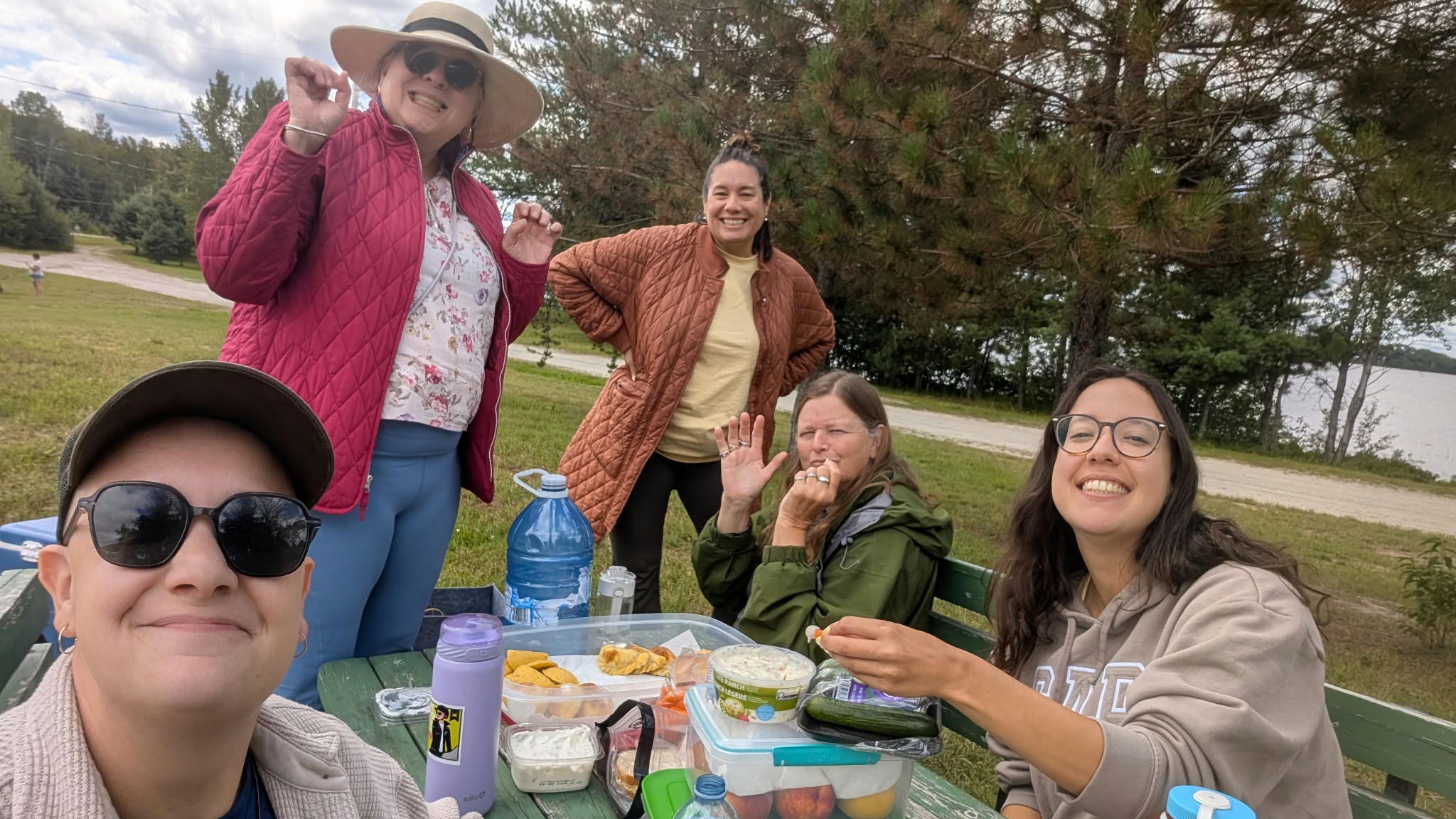
In August, most of our staff team travelled to Eeyou Istchee to spend time in three Cree communities — Mistissini, Oujé-Bougoumou, and Waswanipi. We came home with far more than we brought: new relationships, a fuller understanding of the work happening on the ground, and a renewed conviction that presence itself is part of the work.
In Mistissini, we spent three days hosted by Don and his brother, who fed us and welcomed us into their home with a generosity that no itinerary could have arranged. Over meals and conversation, we learned things about the community like its history, its humour, its hopes, its spooky stories, and its best blueberry picking spots. Things that would never likely have surfaced in a report or a Zoom call. In Oujé-Bougoumou, staff at the Cree Cultural Institute set aside extra time from their day to answer our questions, unhurried, even as their own workload waited. In Waswanipi, we sat in on the Indigenous Court and were given tours, patient explanations, and the space to ask questions most visitors probably don’t get to ask. In each place, the people we met lingered, dreaming out loud with us about what Indigenous self-determination, community care, prevention, and their environments could look like given the right resources and the right partners.
None of that hospitality was owed to us. It was offered generously and with exceptional grace, by people already working incredibly hard for their communities.
 There is good reason partnerships like ours keep returning in person, even with everything video calls now make possible. Real partnerships, the kind that holds up through hard conversations and long-term work, depend on human contact in a way no call can replace. Face-to-face interaction carries body language, tone, and eye contact that text and video simply can’t transmit, and researchers point to that richer signal as part of why in-person contact builds deeper trust and intimacy than communication mediated by a screen (Psychology Today).
CFSC’s relationship with the Cree Nation goes back decades; this trip wasn’t about building something new so much as extending that long-term relationship to more of our staff and partners, so the trust it rests on isn’t carried by one or two people but held more widely across our organization. That was exactly what we felt: the trust Don and his team extended over shared meals, the context Cultural Institute staff offered as they walked us through their space, the vulnerability of community leaders sharing both the difficult and the joyful parts of the lives of the people around them — none of it would have happened through email. And if we’re honest about the balance of that exchange, the Cree gave us far more than we could ever hope to give back.
The same holds inside our own organization. We work most of the year remotely, spread across all of Canada, and while this allows us to have an incredible staff team, it also costs something less tangible. Research on collaboration shows that remote colleagues communicate about shared work roughly 80% less than co-located ones, and physical proximity alone has been shown to measurably lift performance and interaction rates among teammates (Harvard Business Review, via Robin). A 2023 Nature study of scientific teams found that in-person collaborators were more likely to produce genuinely disruptive, conceptual breakthroughs, while dispersed teams gravitated toward narrower technical tasks. Travelling together, hearing each other ask fascinating questions and then reflect our learning back to each other ‘live’ did something for us that no video call can really manage. We built quality relationships with each other through long drives, meals, laughter, morning moods, and the excitement of our work.
To our funders and supporters: this is why we travel, and why we ask you to fund it. In-person time is not a nostalgic add-on to virtual-first work. It is where trust, understanding, and the boldest ideas actually get built.