

Lessons from the road #1: road trip to Eeyou Istchee (the Peoples’ land)
August 27, 2026
Lessons from the road #3: welcomed into relationship (reflections from Eeyou Istchee)
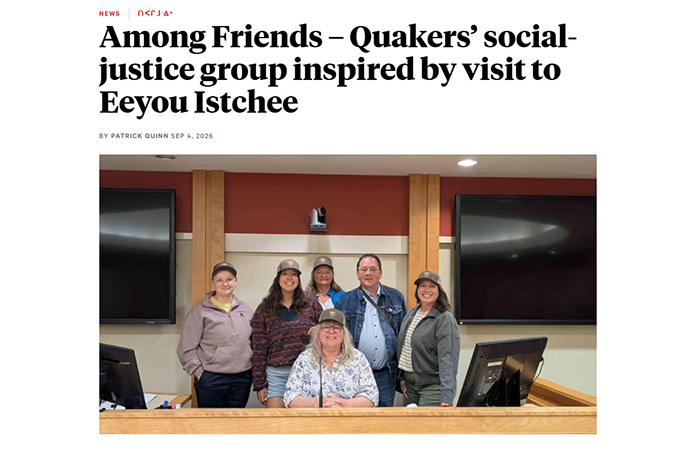
August 27, 2026After our recent Staff Learning tour in Northern Quebec, we invited our staff to write reflections about their time there. In this series of ‘blog’ posts, you learn about how each of our Program Staff and General Secretary connected with the trip, and why it was important to them!
Next up is our Transformational Justice Coordinator Karen Ridd:
Prevention, care, and self-determination: justice initiatives in Eeyou Istchee
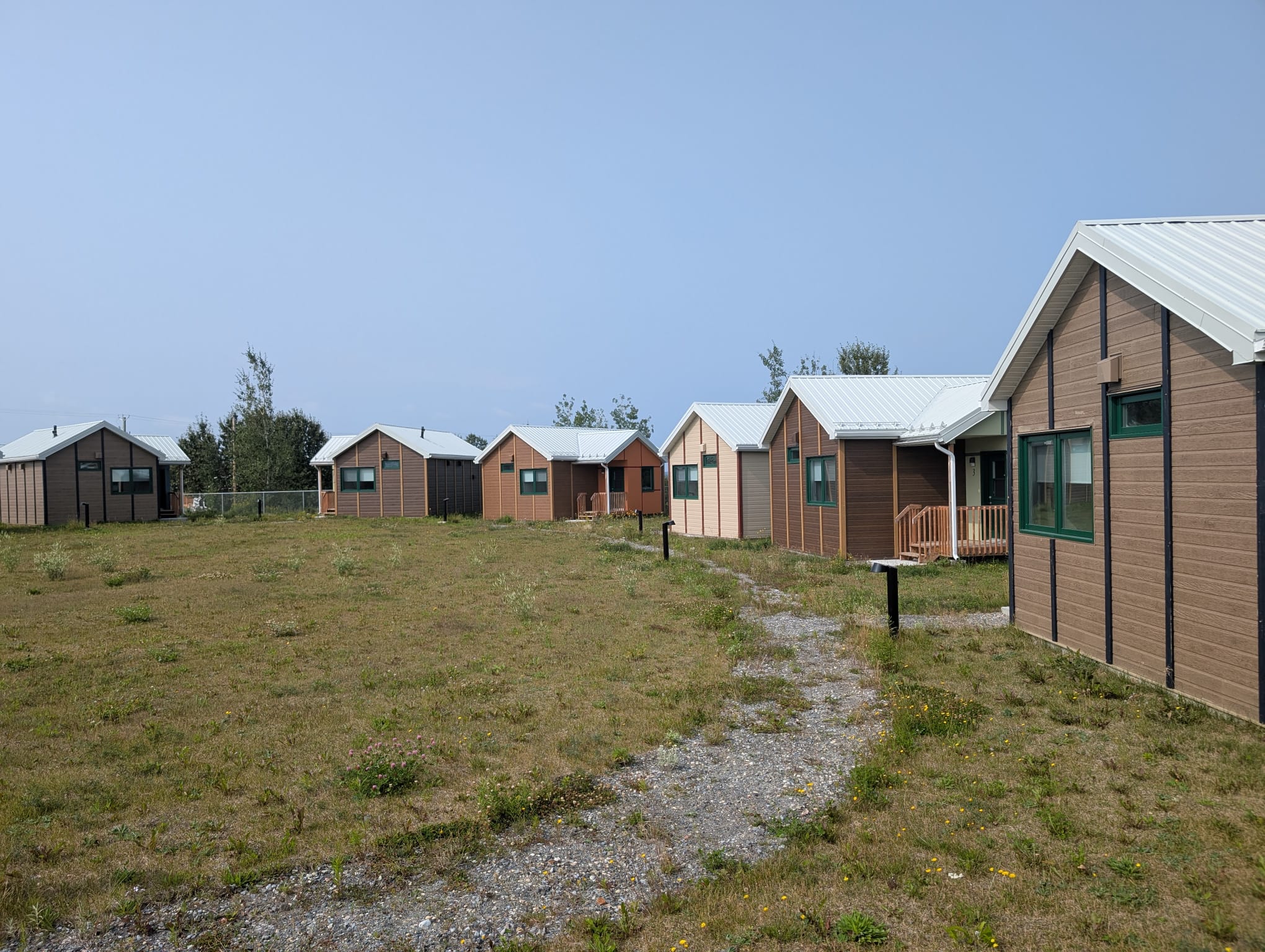
School programs. Time on the land. Healing Circles. Community Justice Committees. Culture Camps. A recreation centre with a basketball court and pool tables. A swimming pool, a hockey arena. A community of “Tiny Homes” for people leaving incarceration. Cree court workers that help people find appropriate programming. Businesses that offer employment opportunities for local youth. Everywhere we looked on our study tour to Eeyou Istchee, CFSC staff saw evidence of the Cree Nation Justice Department’s prioritization of preventative efforts to reduce harm and wrong-doing. They are so clearly on the “right track.”
Research by Canadian criminologist Irvin Waller shows explicitly that a 5% reduction in judicial system spending (incarceration, policing and the justice system) could – if spent on preventative measures – lead to a 50% reduction in violent crime. This is no surprise. Most of us are familiar with health research that points out how prevention of disease and injury is more effective and less costly than the critical care provided by hospitals and ICUs. Dealing with harm and wrong-doing is no different – resources invested upstream in preventive programming, especially for youth, will be more effective, more just, more humane than dealing with harm once it has happened.
Sitting in on a court case in Waswanapi we witnessed the positive impact that the Cree Justice Committees can make: two cases were dismissed because the defendants were doing programming under the auspices of the Justice Committee and Cree Courtworkers.
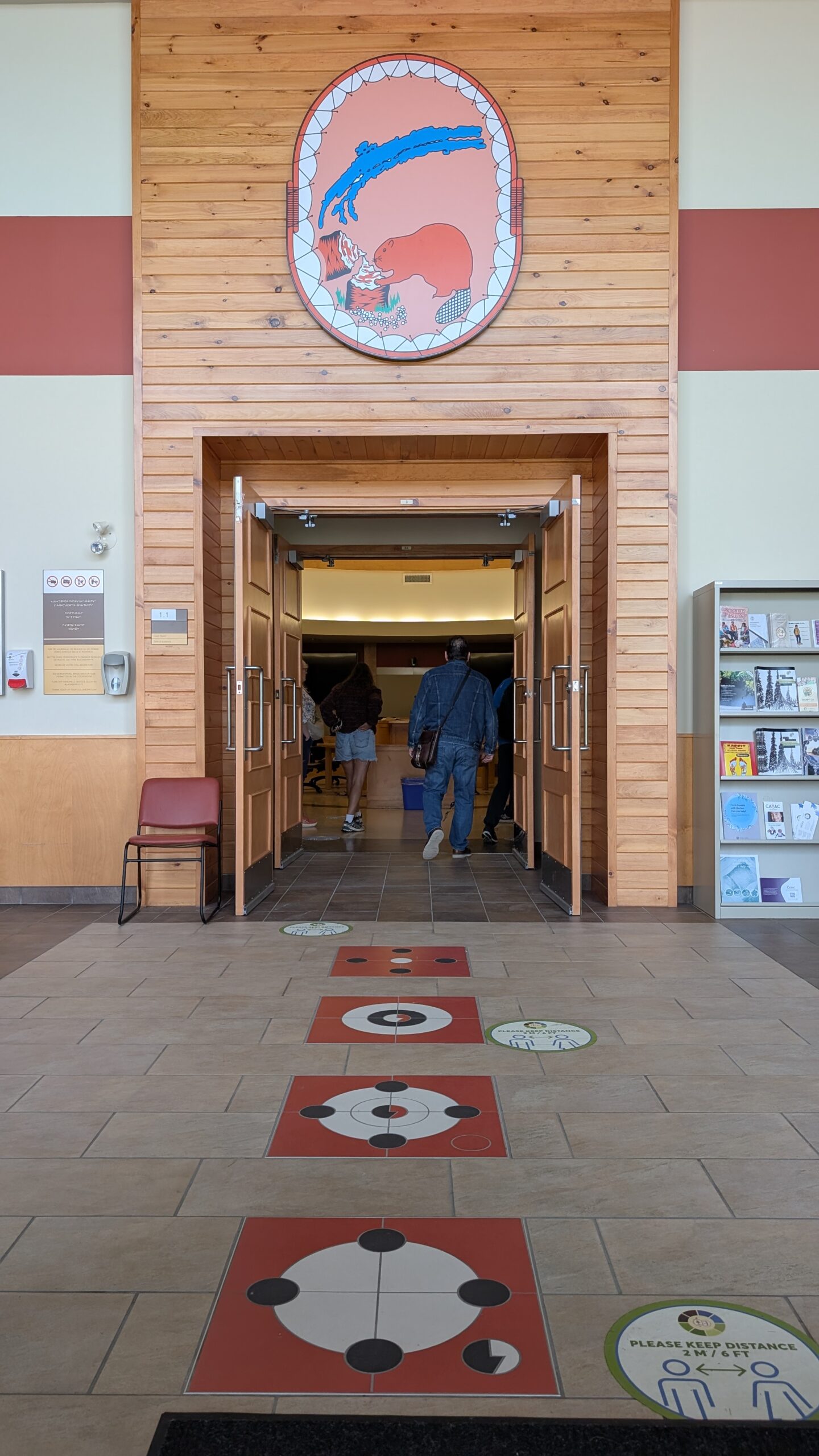 We also witnessed dramatically the need for the kind of changes that the Cree Nation is working towards.
In Canada, we operate on the principle that not only should justice be done, but it should “be seen to be done.” As a result, courtrooms are generally open to the public. Consequently, I’ve sat in many courtrooms, but never in one where a sexual assault is being tried. In many places (including my home city of Winnipeg) the public is often not permitted to sit in on sexual violence cases, in order to protect the privacy of those involved. When I expressed my surprise (and discomfiture) to the very helpful Cree Court Worker in Waswanapi, she in turn was surprised by MY surprise. Sadly, it turns out that – due to the impacts of colonization and residential schools, and some predatorial missionaries in the region – sexual assault cases are all too common in their courts.
So, we witnessed an hour of a sexual assault case.
The court in Waswanapi is still under colonial law. Someday this will change (as is happening in Opaskwayak Cree Nation in Manitoba). One of the Cree Court Workers told us that he looked forward to the day when there were Cree defence lawyers, prosecutors and judges; when that happens, the courts will certainly be changed by their presence. In the meantime, however, we were witnesses to the appalling incapacity of the current mainstream legal system to deal well with sexual violence cases – we witnessed a traumatized “victim” who is now afraid to be left alone and who was forced to disclose details she wanted to block out forever. We saw evidence of friendship circles pulled apart, and an “offender” whose life – already challenging – has been turned upside down. We saw a system that is utterly inadequate to the challenges that such a case presents. We were left feeling like the day when this system is disrupted by an influx of Cree lawyers and judges simply cannot come too soon.
And undoubtedly the Cree will be more than “up to the job.”
One reason that the communities of Eeyou Istchee are so able to do creative preventative programming is due to the powerful James Bay and Northern Quebec Agreement (JBNQA) that they negotiated in 1975. The financial compensation that they received for flooded lands has been wisely invested into community infrastructure, housing programs and support for business ventures. In so many ways, the communities are thriving: exemplifying the creativity that can happen when self-determination and sufficient resources are woven together.
The Cree Nation Department of Justice’s “Tiny Homes” project embodies this creativity.
In each of the 6 major communities in Eeyou Istchee, there is a brand-new circle of 10 Tiny Homes. Some of them are designed for accessibility. All face inward to a central circle, and all are bright, well-appointed, and provide a balance of privacy and community. There is a larger central building for programming and communal cooking. The Cree have recognized that people coming out of carceral institutions need help to reintegrate well into community – they need housing, space to decompress, support, programming, community and care. These little villages are carefully set up to provide all that. Because caring for the people is – and always was – a central Cree value, a value that we experienced so many, many times on our study tour in Eeyou Istchee.